Hello! Welcome to the Nandian Xuanfu Magistracy of the Culture & Tourism Bureau of Lianghe County CN/EN

[National Unity] The South Dian Xuanfu Office: Historical Records of Indigenous Leaders Dedicated to Promoting Ethnic Unity and Progress in Border Regions
![[National Unity] The South Dian Xuanfu Office: Historical Records of Indigenous Leaders Dedicated to Promoting Ethnic Unity and Progress in Border Regions](/npublic/img/s.png "[National Unity] The South Dian Xuanfu Office: Historical Records of Indigenous Leaders Dedicated to Promoting Ethnic Unity and Progress in Border Regions")

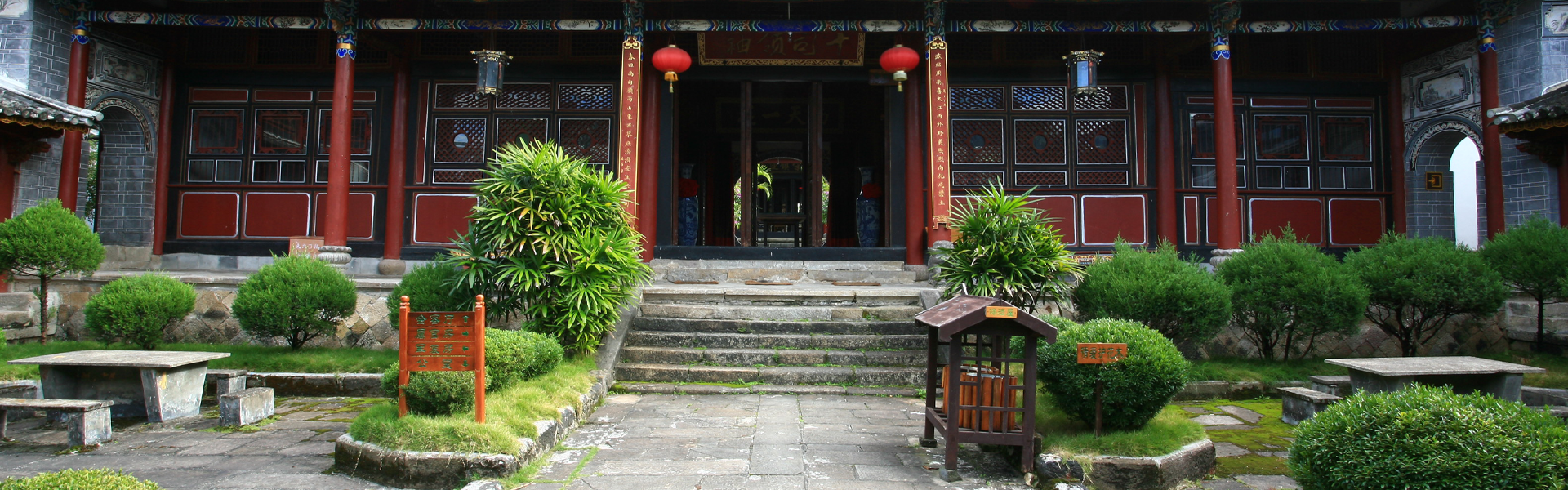
The Nandian Xuanfu Si Office is located at No. 103 Nandian Road, Zhedao Town, Lianghe County. It was originally the hereditary seat of the Dai ethnic group’s Dao Gong clan as the Nandian Xuanfu Si, first established in 1851. Over three generations—specifically the 26th, 27th, and 28th chieftains—the complex underwent continuous expansion, culminating in its completion in 1935. Covering an area of 10,625 square meters with a total floor space of 7,780 square meters, the structure features a traditional timber-and-masonry construction. The architectural layout follows the classic Han-style administrative model, organized into five main sections and four courtyards, including four primary courtyards and ten secondary annexes. The complex comprises various functional buildings such as prison cells, patrol offices, public halls, officials' quarters, military uniform storage, reception rooms, deliberation halls, accounting offices, the main hall, and even the Protectorate Seal Office. With its meticulously planned design, clear distinction between primary and secondary structures, and intricate wood carvings and ornate decorations, this site stands out as one of the most well-preserved examples of Tusi architecture in China. It serves as an invaluable historical and cultural resource for studying Yunnan’s minority ethnic history, local regional history, the Tusi system, as well as advancements in architectural techniques and artistic styles. As a result, it holds significant historical and artistic value. In 1996, the site was officially designated as a National Key Cultural Relic Protection Unit, and by 2004, it had earned recognition as a National 4A-level Tourist Attraction.

I. Ethnic Distribution within Lianghe County
Today, more than 20 ethnic groups—including Han, Dai, Achang, Jingpo, De'ang, Lisu, and Wa—reside within the county's borders. The climate is mild, and the region boasts abundant natural resources. With a rich tapestry of cultural landmarks and deeply rooted ethnic traditions, Lianghe is home to several indigenous communities: the Han, Dai, Achang, Jingpo, De'ang, Wa, and Lisu peoples have called this area home for centuries. As early as the Han and Jin dynasties, the "Pu people"—the ancestors of today’s Wa and De’ang ethnic groups—and the "Yue people," who were the forebears of the Dai, already inhabited the region. During the Yuan Dynasty, the Achang people began migrating here, while in the mid-Ming Dynasty, significant numbers of Han Chinese from inland areas gradually settled in the region. By the Qing Dynasty, the Jingpo and Lisu ethnic groups had also made their way to Lianghe. In terms of ethnic distribution, the Jingpo, Lisu, and De'ang tend to live in mountainous areas, while the Achang and Wa often reside in semi-mountainous or hilly-plain regions. The Dai primarily inhabit the fertile lowland plains, and the Han are scattered across the entire county, with a stronger presence in the mountainous zones. Due to historical and geographical factors, the coexistence of these diverse ethnic groups has resulted in a distinctly mixed settlement pattern. According to statistics, out of the county’s 380 natural villages, 225 are home to two or more ethnic groups living side by side, while 155 villages remain exclusively inhabited by a single ethnic community.
Due to its remote location on the frontier, the socio-historical development of Lianghe's ethnic groups has historically been relatively slow. Before the founding of New China, the Dai people in the dam areas were transitioning from a feudal lord-based economy toward a landlord-dominated system, while the economies of ethnic minorities in mountainous regions remained largely tied to the feudal lord structure. Meanwhile, the Jingpo people still retained many vestiges of their original communal systems. Only the Han Chinese areas had largely adopted a landlord-based economic model, with some small-scale commerce and industry emerging—but even here, productivity remained extremely low, and both the economy and culture were deeply underdeveloped. To make matters worse, exploitation by local chieftains, landlords, and grain merchants, coupled with rampant banditry, plunged the people of Lianghe into an abyss of unbearable suffering, poverty, and hardship. In 1950, Lianghe was liberated, marking the beginning of a new era characterized by equality, unity, and shared prosperity for all ethnic groups. Since then, under the leadership of the Communist Party of China and guided by the Party’s enlightened ethnic policies, the people of Lianghe—from every ethnic group—have steadfastly embraced the socialist path, embodying the spirit of self-reliance and hard work. As a result, Lianghe has undergone a transformative, earth-shattering change, rising dramatically from its past struggles to a brighter, more prosperous future.

II. Historical Figures of Tusi Who Dedicated Themselves to Ethnic Unity and Progress in Border Regions
The hereditary chieftains of the Tusi system made significant contributions to the integration of ethnic minorities in border regions with the Han Chinese, earning them lasting admiration from later generations—a testament vividly reflected in the serene, timeless architecture of the past.
In the reception hall, a couplet hangs from the ornate columns on either side, reading: "By upholding the moral and ritual teachings of *Zhou Nan* from the *Book of Songs*, we joyfully witness the flourishing of ethnic groups—both within and beyond the Yangtze River—as they embrace transformation, turning their homelands into peaceful, idyllic lands. On this spring day, may the people dwelling beneath the eastern and western mountains of Nandian in southwestern China thrive in prosperity and stability, willingly submitting to the rule of their local chieftain. Together, guided by the chieftain’s vision, they harmoniously align themselves under his authority."
Although the Nandian Tusi was of Dai ethnicity, frequent military campaigns during the Yuan, Ming, and Qing dynasties led to soldiers settling in Nandian to establish agricultural colonies. Additionally, the central imperial court actively encouraged large-scale migration of people from inland regions to settle in Nandian, facilitating the introduction of Central Plains culture into the area. At that time, all official correspondence between the Tusi, the imperial court, and higher-ranking officials was conducted in Chinese. Moreover, the Tusi’s nobility were expected to be proficient in both reading and writing Chinese as well as speaking Mandarin, which is why the Nandian Tusi placed great emphasis on educating their people in Han Chinese culture.
The 27th-generation Tusi, Dao Dingguo, once sent his eldest son, Gong Shou, to a private academy in Tengchong, where they were taught by Han Chinese instructors—Wu Jialu (a Bo Gong) and Lan Yousan—focusing on classics like the *Three Character Classic*, the *Four Books*, and the *Five Classics*. After Gong Shou succeeded as Tusi, he subsequently enrolled his own son, Gong Tongzheng, in stages at the Tusi Office Academy, Zhadao Provincial Primary School, Kunming Nanqing Middle School, and finally the National Frontier School in Chongqing. Meanwhile, Gong Yueqing, the son of Dao Zhiguo—Dao Dingguo’s younger brother—completed his studies at a Han Chinese private secondary school before going on to further his education at Yunnan School of Political Science and Law and later at the Central Military Training Class. His younger brother, Gong Yuequan, attended the 21st class of Yunnan Military Academy and later studied infantry science at the Central Military and Political School. Clearly, Han culture not only has deep historical roots but has also profoundly influenced China’s ethnic minorities.
According to historical records, after the Japanese forces invaded Chadao Island, the 28th Nandian Native Chief, Gong Shou and Gong Tongzheng, transformed the "Security Association" into a "Maintenance Association." In May 1944—the 33rd year of the Republic of China—when the Counteroffensive Campaign in Western Yunnan commenced, Gong Shou returned to the chieftain's office and established the first Military-Civilian Cooperation Station on Chadao Island, organizing the supply of food and provisions needed by the Nationalist troops.
In August of the 36th year of the Republic of China, Gong Shou, together with Dao Jingban, convened the Tenglong Border Region Conference on Post-Revocation Measures in Mengyang Manghuan, where they formally requested the government to approve the establishment of a committee within each border region office, aimed at accelerating development and reconstruction efforts in these areas. By April of the 37th year of the Republic of China, the Administrative Office set up a temporary Legislative Council in Dachang. Gong Shou personally led officials from the regional offices to Dachang, directly proposing himself as the council’s chairman. However, pressured by the influential power of the local chieftains, the Director of the Administrative Office, Guo Chongxiao, ultimately reversed the decision—appointing Chen Zhengde, who had already been voted as chairman, as vice-chairman instead—and installed Gong Shou as the official chairman. As a result, the Legislative Council’s headquarters were relocated to the chieftain’s administrative headquarters.
After the liberation of Tengchong at the end of 1949, the Yunnan-Western Region People's Liberation Committee and the 36th Regiment of the "Border Column" issued the "Appeal to Local Chiefs and Their People," while also sending letters directly to the chiefs. The Baoshan Prefectural Committee of the Communist Party of China tasked Cun Shusheng, Director of the Tengchong County Liberation Committee, with engaging the local chiefs. After establishing a constructive dialogue, Zheng Gang, Secretary of the Prefectural Committee and Political Commissar of the 41st Division, traveled to Nandian to negotiate with the chief. Through careful maneuvering and persistent talks, Gong Shou eventually agreed to allow the People's Liberation Army to station troops in the region.
In early May 1950, the People's Liberation Army and the Lianghe Military and Political Delegation entered Lianghe, sending people to Luoboba to bring back Gong Shou. Zhang Qi, Deputy Secretary of the CPC Liang(he), Ying(jiang), Lian(shan) Work Committee, went to the office to discuss with him the establishment of the Ethnic Administrative Committee. Gong Shou accepted the party's leadership and served as the director of the Lianghe Ethnic Administrative Committee. Later, he was also elected as the deputy director of the Baoshan Special Zone Political Consultative Committee. During this period, he made many beneficial contributions in raising military supplies and funds, uniting production, suppressing bandits and special agents, and supporting the Korean War.
After 1950, Gong Shou successively served as the director of the Lianghe Ethnic Administrative Committee, county head of the Lianghe County United Government of All Ethnic Groups, member of the Baoshan Special Zone United Government of All Ethnic Groups, deputy governor of the Dehong Prefecture People's Government, member of the first Standing Committee of the Yunnan Provincial Political Consultative Conference, vice chairman of the Provincial Ethnic Affairs Committee, and representative of the first, second, and third National People's Congress. In November 1951, the Baoshan Special Zone Office notified Gong Shou to attend a meeting in Beijing and go on a tour. He visited various places and participated in the expanded meeting of the National Ethnic Affairs Committee, where he spoke at the conference. On April 11, 1952, Gong Shou returned to Lianghe after a journey of 5 months and 6 days. Gong Shou was moved and said: "The hospitality was the best, medical doctors accompanied the entire journey to prevent diseases and provide care, and the route was protected by the military with meticulous attention to every detail." "All that I witnessed, the economy and education of various provinces and counties... were advancing and developing rapidly, making great progress day by day." In May of the same year, at the representative meeting for the establishment of the Lianghe County United Government, Gong Shou gave a report on his observations in Beijing. He concluded by saying: "I personally am willing to work together with everyone, wholeheartedly, to do well in the key tasks within Lianghe such as transportation, culture, production, construction, medical and health care, and the suppression of special agents and bandits." At the meeting, Gong Shou was elected as the first county head of Lianghe County. In 1954, as a representative of the National People's Congress, he participated in the first National People's Congress. In May 1955, he attended another meeting and was received by Chairman Mao. The work on ethnic unity and progress in the border areas received full recognition from the highest central leadership.

During the "Cultural Revolution," Gong Shou was persecuted. In January 1969, Gong Shou was seriously ill. The party and government arranged for him to rest and receive treatment, but he was still subjected to mistreatment. In March of the same year, he died unjustly at the age of 79. On July 25, 1979, the Prefectural Revolutionary Committee held a memorial meeting at the small auditorium in Mangshi to rehabilitate Gong Shou and others. The Prefectural Revolutionary Committee's "Decision on the Rehabilitation and Restoration of the Reputation of Former Deputy Governor Gong Shou" pointed out: "Gong Shou loved the great socialist motherland. He had been received by Chairman Mao, Premier Zhou, and Chairman Zhu De... Under the care of the party and government, he believed in the party's ethnic policies and united front policies, and had made contributions to maintaining national unity, supporting socialist reform and construction in the border areas, and enhancing ethnic unity."
In summary, as the only 4A-level scenic spot and national-level cultural protection unit in the county, the Nandian Pacification Office Management Bureau is fully committed to promoting ethnic unity, jointly building a harmonious scenic area, and creating a model example of multi-ethnic unity, struggle, and common prosperity and progress. It actively strives to be a demonstration scenic area for ethnic unity and progress activities in Lianghe County.
Office Address: No. 103 Nandian Road, Zhedao Town, Lianghe County
Customer Service Hotline:0692-6166603
Corporate email:1043492702@qq.com

Mobile app
Copyright: Lianghe County Culture and Tourism Bureau Technical Support:www.300.cn Kunming SEO